A dental implant is a small metal post placed in the jaw to replace the root of a missing tooth. A crown, bridge or denture is then attached to it.
At a glance
- What it is
- A post in the jawbone that holds a replacement tooth
- Numbing
- Local anaesthetic for the surgery
- Time
- Several months, and sometimes longer, because the bone needs time to heal around the implant
- Suitable for
- People with healthy gums and enough jawbone. Your dentist checks this first.
- Cost
- Depends on your case. Your dentist tells you before starting.
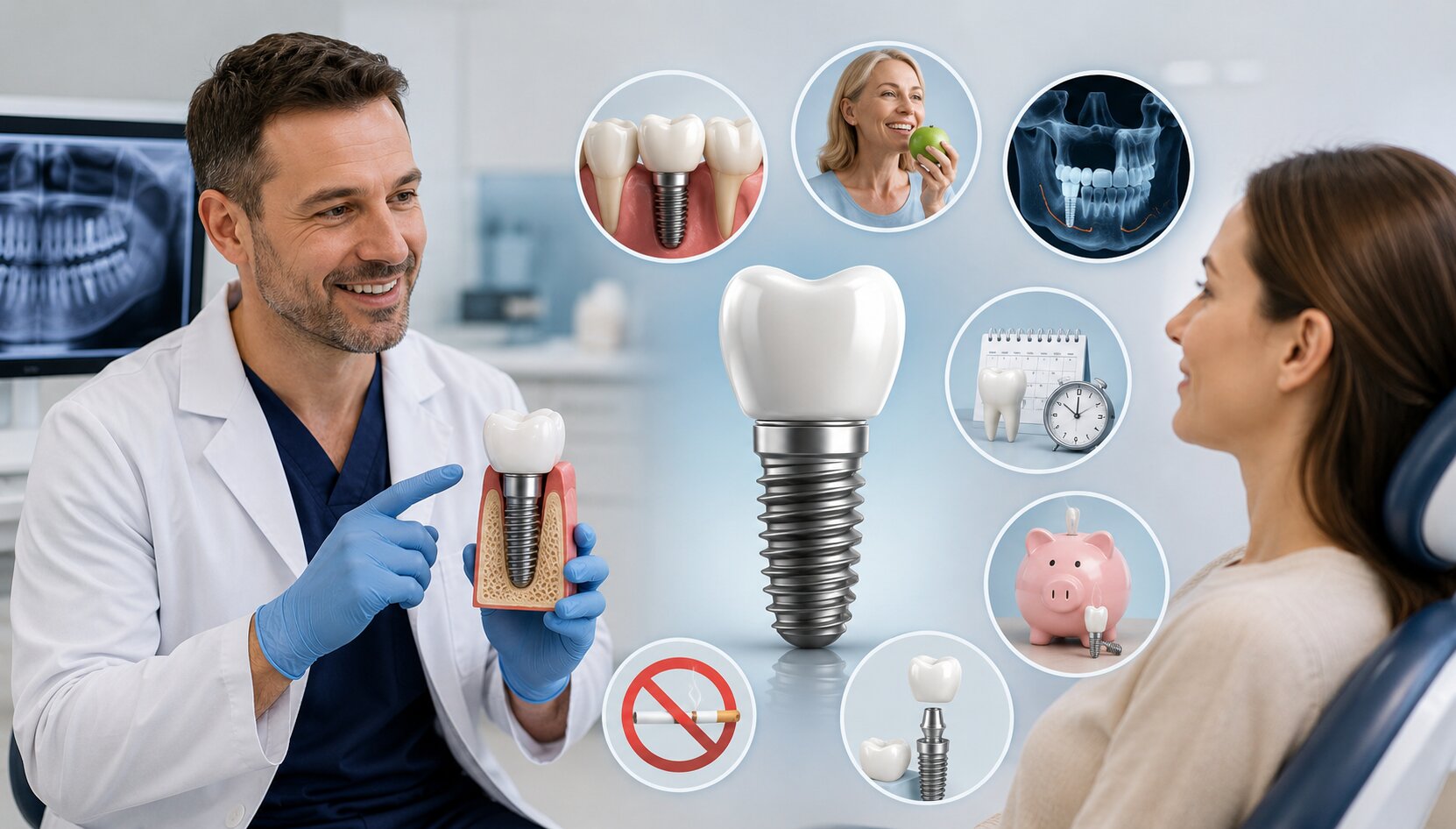
What an implant is
The post is usually made of titanium. Over a few months the jawbone grows around it and holds it firmly in place. Once the bone has healed, a replacement tooth is attached to the post. An implant can replace a single tooth, several teeth, or can support a bridge or denture.
Who may be suited
- You have lost one or more teeth
- Your gums are healthy
- There is enough bone in your jaw, or bone can be added
- You are able to keep your mouth very clean and go to regular check-ups
Smoking, some health conditions and untreated gum disease make problems more likely, so tell your dentist about your health and habits. Your dentist decides whether an implant is right for you.
The stages of treatment
- Assessment. The dentist examines your mouth and takes X-rays or scans and impressions to plan where the implant would go.
- Preparing the jaw if needed. If there is not enough bone, a bone graft may be advised. It needs time to heal before the implant is placed.
- Placing the implant. Under local anaesthetic, the implant is placed in the jawbone.
- Healing. The implant is left to join with the bone. This usually takes several months.
- Attaching the tooth. Once the implant is firm, a crown, bridge or denture is attached to it.
After surgery
- Soreness, swelling, bruising and a little bleeding are common. They usually settle within about a week, and simple pain relief taken as your dentist advises can help.
- Keep the area clean as your dentist tells you and be careful not to disturb it while it heals.
- Do not smoke, because it slows healing and increases the risk of the implant failing.
- Clean around the implant as carefully as you would a natural tooth, and keep going to check-ups.
Risks
- The implant may not join properly with the bone. The risk is higher in smokers.
- The gum and bone around an implant can become infected if it is not kept clean.
- Parts of an implant can loosen or wear over time and need repair.
- As with any surgery, there is a small risk of bleeding, infection, or damage to nearby teeth, nerves or the sinus.
Success rates are generally high, but not every implant lasts. Your dentist will explain the risks for your case before you decide.
Other ways to replace a tooth
Other options are a bridge, which uses the teeth on either side of the gap, or a denture. Each has advantages and disadvantages, and your dentist can help you compare them.
When to get urgent help
Go to the nearest hospital straight away (or call 112) if you have swelling of the face or neck, swelling that makes it hard to breathe or swallow, or a fever together with tooth or gum pain. Do not wait for an appointment.
Common questions
Does it hurt?
The area is numbed for the surgery. Afterwards it can be sore and swollen for a few days. Your dentist will tell you what to take for pain.
How long does it take?
From the first assessment to the final tooth it can take several months, and sometimes a year or more, depending on healing and whether bone needs adding.
How long will an implant last?
It depends on your health, your bone, your habits and how well you keep it clean. Your dentist can tell you what to expect for your case.
Can anyone have an implant?
No. You need healthy gums and enough bone, and some health conditions make implants unsuitable. The dentist will check this.
How much does it cost?
The cost depends on the number of implants, whether bone needs adding and the type of tooth attached. Dr. Anjali will explain it after examining you.
Dental implants at Gangtok Dental Clinic
Dr. Anjali Gupta sees patients at Gangtok Dental Clinic and has more than 6 years of experience in dentistry. She will look at your gums, teeth and jawbone first and tell you whether an implant, or another way of replacing the tooth, would suit you. She will explain what she finds and go through your options and the cost with you, and nothing is started until you are ready to go ahead.
We are open every day from 10:00 AM to 8:00 PM. Call or message us on WhatsApp at +91 82106 99271 to book an implant consultation. Our address is on the contact page.
This page gives general information about the treatment. It is not a diagnosis or medical advice, and what you need depends on an examination by your dentist. Please read our Medical Disclaimer.