A partial denture is a removable appliance that replaces one or more missing teeth while your natural teeth remain, held in place by clasps or a metal or plastic framework. An immediate denture is a partial or complete denture fitted on the same day teeth are removed.
At a glance
- What it is
- A removable denture that replaces some, but not all, of your teeth
- Numbing
- Not needed to fit the denture; needed only if teeth are being removed first
- Time or visits
- Several visits for measurements, fitting and a trial before the final denture
- Aftercare
- Getting used to wearing and removing it, and regular cleaning
- Cost
- Depends on the number of teeth replaced and the material used. Your dentist tells you before starting.
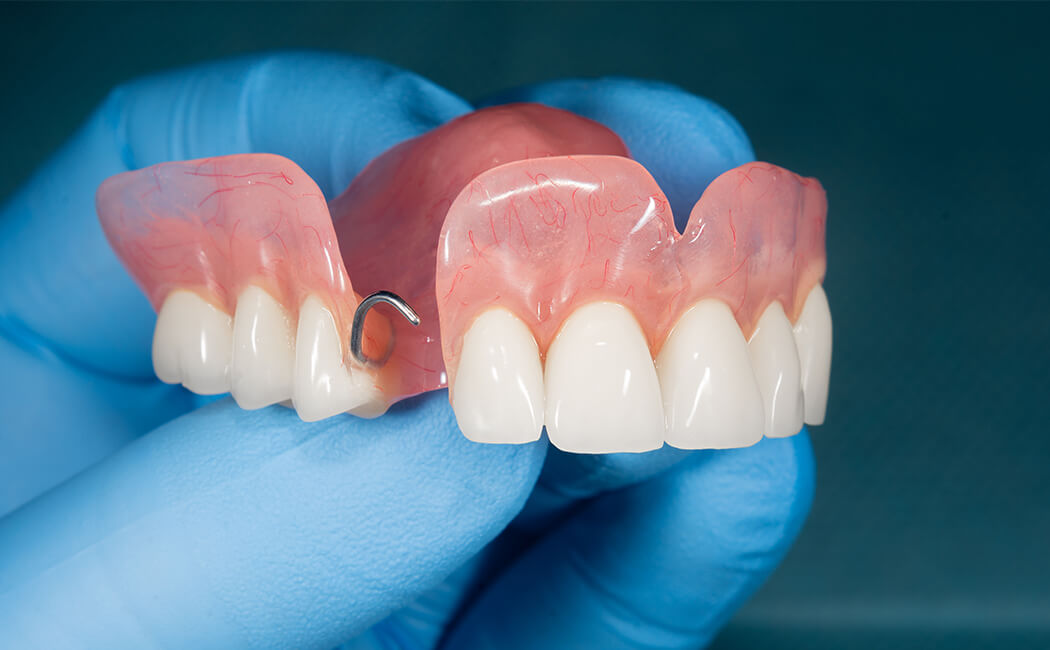
What partial and immediate dentures are
A partial denture fills the gaps left by missing teeth using false teeth set into a base that clips onto your remaining natural teeth. It can be taken out for cleaning and at night. An immediate denture is made in advance from measurements taken before your teeth are removed, so you leave the clinic with a denture in place on the same day, rather than waiting weeks with gaps. See our Complete Dentures page if all the teeth in a jaw are being replaced instead.
When these are used
- One or more missing teeth where a fixed option such as a bridge or implant is not suitable or not wanted
- Difficulty chewing or speaking clearly because of gaps in your teeth
- Remaining teeth that have started to drift or tilt into a gap
- Teeth that need to be removed and you want something in place straight away, which is when an immediate denture is considered
What happens step by step
- Examination. The dentist checks your remaining teeth, gums and bite, and discusses whether a partial denture, a fixed option, or an immediate denture suits your situation.
- Measurements. Impressions or a digital scan of your teeth and gums are taken to design the denture.
- Trial fitting. A trial denture is often tried in your mouth so the fit, bite and appearance can be checked before the final version is made.
- Fitting. The finished denture is fitted and adjusted for comfort. For an immediate denture, it is fitted on the day any teeth are removed.
- Follow-up. A later visit checks the fit, since gums change shape as they heal, and adjustments are made if needed.
After you get a partial denture
- It can feel bulky or loose to speak and eat with at first. This usually improves with practice.
- Start with softer food cut into smaller pieces, then return to your usual diet as you get used to it.
- Take the denture out to clean it and clean your remaining teeth and gums as normal.
- Follow the dentist’s advice on whether to remove it at night.
- With an immediate denture, expect a follow-up visit soon after fitting, since the gums shrink a little as they heal and the fit is checked and adjusted.
Risks and other options
A denture can rub and cause sore spots at first, and it needs occasional adjustment as your gums and remaining teeth settle over time. An immediate denture typically needs more adjustment in the weeks after fitting, since the gums change shape as they heal from the extractions. Alternatives to a partial denture include a fixed bridge or a dental implant, and the dentist will discuss whether these suit your case. See our Crowns and Bridges page and Dental Implants page.
When to get urgent help
See your dentist soon if your denture is causing ongoing sore spots, does not fit properly, or breaks. Go to the nearest hospital straight away (or call 112) if you have swelling of the face or neck, swelling that makes it hard to breathe or swallow, or a fever together with mouth pain. Do not wait for an appointment.
Common questions
Will it hurt?
Fitting a denture is not painful. If teeth need to be removed first, that part is done under local anaesthetic.
How long does it take to get used to a denture?
It varies by person, but most people adjust to speaking and eating with it within a few weeks.
What is the advantage of an immediate denture?
You are not left with visible gaps while you heal from having teeth removed. It usually needs more adjusting afterwards as your gums heal and change shape.
Can I sleep in my denture?
The dentist will advise you, since taking it out at night is often recommended to let your gums rest.
Do I still need to look after my remaining teeth?
Yes, brushing, cleaning between the teeth and regular check-ups are still important to protect the teeth the denture clips onto.
How much does it cost?
It depends on the number of teeth being replaced and the material used, so we can only tell you after examining you. Dr. Anjali will explain the cost before starting.
Partial dentures at Gangtok Dental Clinic
Dr. Anjali Gupta sees patients at Gangtok Dental Clinic and has more than 8 years of experience in dentistry. She will examine your teeth and gums first, explain what she finds, go through the options and the cost with you, and nothing is started until you are ready to go ahead.
We are open every day from 10:00 AM to 8:00 PM. Call or message us on WhatsApp at +91 82106 99271 to book a check. Our address is on the contact page.
This page gives general information about the treatment. It is not a diagnosis or medical advice, and what you need depends on an examination by your dentist. Please read our Medical Disclaimer.