Wisdom teeth are the last teeth to come through, usually in your late teens or twenties. Many people have enough room for them. When there is not, they can get stuck, cause pain or infection, and sometimes need to be taken out.
At a glance
- What it is
- Removal of one or more wisdom teeth
- Numbing
- Local anaesthetic. Some difficult cases need extra sedation or a hospital.
- Time
- From a few minutes to around 40 minutes for a tooth
- Recovery
- Soreness and swelling for a few days, and some people take up to two weeks to settle fully
- Cost
- Depends on the tooth. Your dentist tells you before starting.
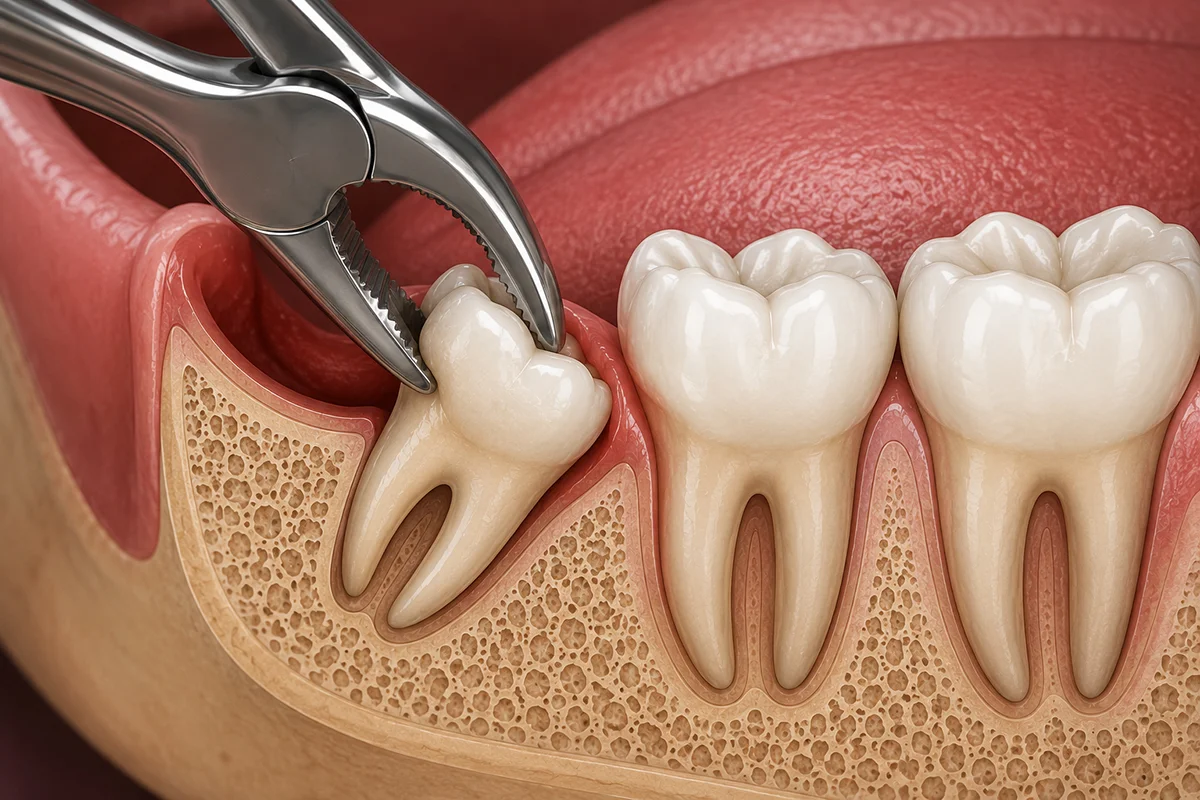
Why wisdom teeth are taken out
- There is not enough room, so the tooth is stuck under the gum or bone (impacted) or only partly through
- Repeated gum infections around a partly erupted tooth, called pericoronitis
- Decay in the wisdom tooth or in the tooth in front of it
- Food that gets trapped and cannot be cleaned
- A tooth that is damaging the one next to it
- Cysts or other problems around the tooth
Not every wisdom tooth needs to come out. If a wisdom tooth is healthy, in the right position and easy to clean, your dentist may simply keep an eye on it.
What happens
- Examination and X-ray. The dentist checks the tooth and takes an X-ray to see its position, its roots and nearby nerves.
- Numbing. Local anaesthetic numbs the tooth and the area around it. You stay awake.
- Removal. The tooth may come out whole, or it may be divided into pieces. A small cut in the gum, and sometimes removing a little bone, may be needed.
- Closing up. Stitches are sometimes used. You bite on gauze to stop the bleeding.
If your tooth is deeply buried or very close to a nerve, Dr. Anjali will tell you whether it should be treated at the clinic or by a specialist surgeon.
Recovery and aftercare
- Rest for the rest of the day. Many people are back to normal activities within a day or two.
- Keep biting on the gauze as advised. A little oozing is normal in the first day.
- Do not rinse on the day of surgery. From the next day, rinse gently with warm salt water several times a day.
- Eat soft, cool food at first, and chew on the other side.
- A cold pack held against the cheek for short periods can help with swelling in the first day or two.
- Do not smoke or drink alcohol for the first days, and avoid hard or spicy food.
- Take pain relief only as your dentist advises.
- Brush your other teeth as normal and be gentle around the area.
Possible problems
- Dry socket. If the blood clot is lost, the socket can become very painful, often 3 to 5 days later. Your dentist can treat it.
- Infection. Pain and swelling that get worse after the first few days can mean infection, which may need antibiotics.
- Numbness or tingling. Nerves near the tooth can be bruised, causing numbness or tingling in the lip, chin or tongue. This is usually temporary.
- Bleeding. Persistent bleeding needs attention.
Your dentist should explain the risks for your tooth before starting.
When to get urgent help
See your dentist urgently if bleeding does not stop after pressing firmly on clean gauze for about 20 minutes, if pain gets much worse and painkillers do not help, or if you have fever and a bad taste in your mouth. Go to the nearest hospital straight away (or call 112) if you have swelling of the face or neck, swelling that makes it hard to breathe or swallow, or a fever together with tooth or gum pain. Do not wait for an appointment.
Common questions
Do all wisdom teeth have to come out?
No. Healthy wisdom teeth that are in a good position and easy to clean can be left in place. Your dentist will tell you which is right for you.
Will it hurt?
The area is numbed, so you should feel pressure and pushing but not pain. Tell the dentist if you do feel pain. It is normal for the area to be sore afterwards.
How long does recovery take?
Most people feel better within a few days and can return to normal activities within a day or two. Full healing takes longer.
Can I go to work or college the next day?
Many people can, but it depends on how the removal went. Ask your dentist.
Can I eat normally?
Start with soft, cool food and chew on the other side. Go back to normal food gradually.
How much does it cost?
It depends on how difficult the tooth is to remove, so it can only be worked out after an examination. Dr. Anjali will explain it first.
Wisdom tooth removal at Gangtok Dental Clinic
Dr. Anjali Gupta sees patients at Gangtok Dental Clinic and has more than 6 years of experience in dentistry. She will look at the tooth and its X-ray and tell you whether it needs to come out, or can be left. She will explain what she finds and go through your options and the cost with you, and nothing is started until you are ready to go ahead.
We are open every day from 10:00 AM to 8:00 PM. Call or message us on WhatsApp at +91 82106 99271 to book an examination. Our address is on the contact page.
This page gives general information about the treatment. It is not a diagnosis or medical advice, and what you need depends on an examination by your dentist. Please read our Medical Disclaimer.