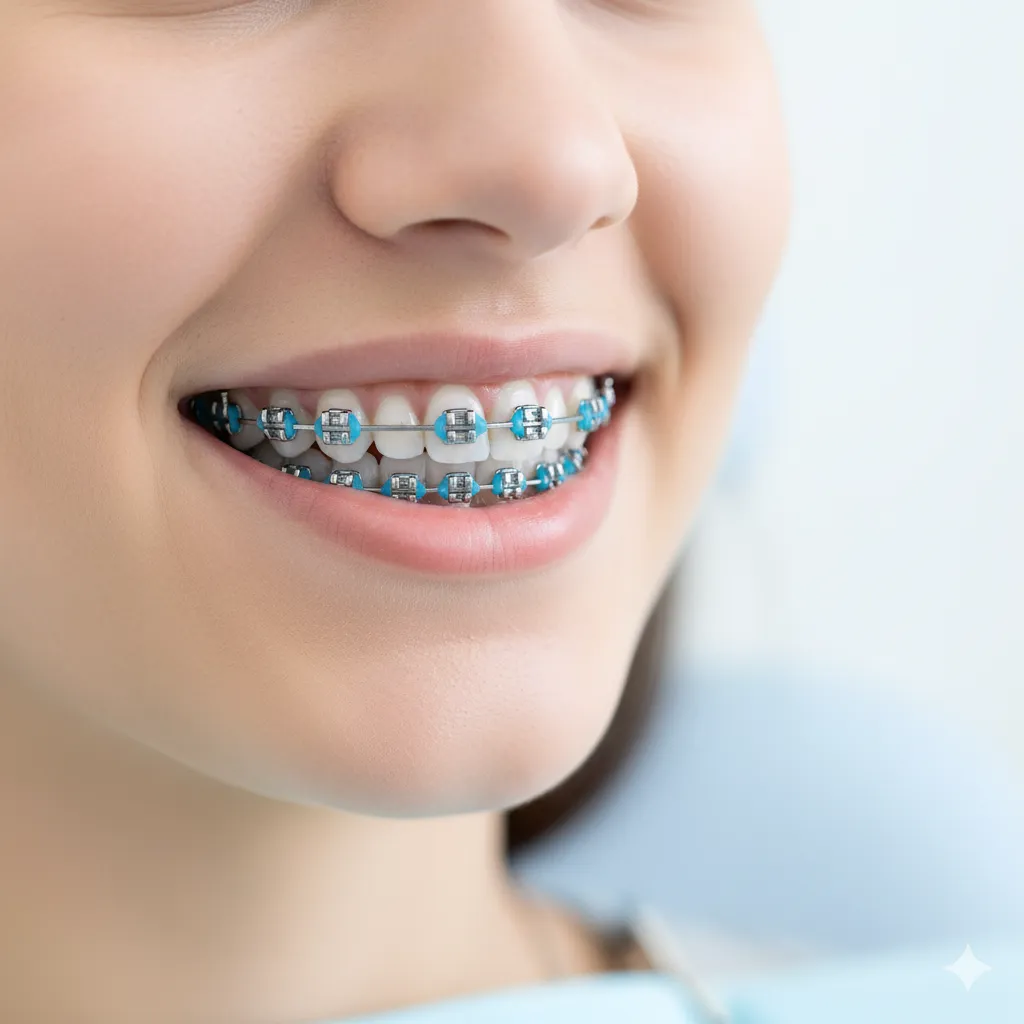
Braces and aligners are used to move teeth into a better position. They can help with crowded teeth, gaps and a bite that does not meet properly.
At a glance
- What it does
- Gradually moves teeth into a new position
- Types
- Fixed braces, clear removable aligners, and some removable appliances
- Time
- Often around 18 to 24 months, and longer for complex cases
- Visits
- Regular check-ups to adjust or change the braces or aligners
- After
- Retainers are worn to help keep the teeth in position
- Cost
- Depends on the type and length of treatment. Your dentist tells you before starting.
Why people have braces or aligners
- Crowded or overlapping teeth
- Gaps between teeth
- Teeth that stick out or sit far back
- An upper and lower bite that do not meet properly
- Teeth that are hard to keep clean because of their position
Straighter teeth can be easier to brush and clean. Some people also want them for how they look. Either reason is fine, and your dentist will talk to you about what you want.
Types of appliance
- Fixed braces. Small brackets are fixed to the teeth and joined by a wire. They are adjusted at each visit.
- Clear aligners. A series of clear plastic trays that you take out to eat and to clean your teeth. They only work if you wear them for as many hours a day as you are told.
- Removable appliances. Sometimes worn before or alongside fixed braces to improve the bite.
Which one suits you depends on your teeth, your bite and what you want to change. Some cases are more complex than others, and Dr. Anjali will tell you what she thinks is right for your teeth.
What happens during treatment
- Consultation. The dentist examines your teeth and bite, and usually takes X-rays and moulds or scans.
- Planning. The dentist explains the options, how long treatment may take and the cost.
- Fitting. Braces are fixed to your teeth, or you are given your first aligners.
- Check-ups. You come back regularly so the dentist can check progress and adjust the braces or give you new aligners.
- Retainers. When treatment finishes, you are given retainers. Teeth tend to move back, so you need to wear them as instructed.
Looking after your teeth during treatment
- Brush carefully after eating, and around the brackets and wires if you have fixed braces. Ask the dentist about interdental brushes.
- Avoid hard and sticky food that can break brackets or bend wires.
- With aligners, wear them for as long as you are told, and clean the trays as advised.
- Your teeth can feel sore for a few days after fitting or adjusting. Take pain relief only as advised.
- Keep going to your regular dental check-ups.
Things to be aware of
- Braces make cleaning harder. If teeth and gums are not kept clean, decay and gum problems can develop.
- Brackets and wires can rub and cause mouth ulcers.
- Teeth can move back if retainers are not worn as advised.
- Treatment can take longer than planned, especially if appointments are missed or aligners are not worn.
When to get urgent help
Go to the nearest hospital straight away (or call 112) if you have swelling of the face or neck, swelling that makes it hard to breathe or swallow, or a fever together with tooth or gum pain. Do not wait for an appointment.
Common questions
Does it hurt?
Braces and aligners are not usually painful, but teeth can feel sore or tender for a few days after they are fitted or adjusted. Pain relief taken as advised by your dentist usually helps.
How long will I need braces?
Treatment often takes around 18 to 24 months, though it can be shorter or longer. Your dentist can give you an idea once they have examined your teeth.
Can adults have braces?
Yes. Adults can have braces or aligners as long as their teeth and gums are healthy.
Do I need to wear a retainer?
Yes. After treatment your teeth can slowly move back, so retainers are used to hold them in place. Your dentist will tell you how long to wear them.
Can I eat normally?
With fixed braces you need to avoid hard and sticky food. With aligners you take them out to eat, then clean your teeth before putting them back.
How much does it cost?
The cost depends on the type of appliance and how long treatment takes, so it can only be worked out after an examination. Dr. Anjali will explain it first.
Braces and aligners at Gangtok Dental Clinic
Dr. Anjali Gupta sees patients at Gangtok Dental Clinic and has more than 6 years of experience in dentistry. At the first visit she will look at your teeth and bite and tell you what treatment she thinks would suit them. She will explain what she finds and go through your options and the cost with you, and nothing is started until you are ready to go ahead.
We are open every day from 10:00 AM to 8:00 PM. Call or message us on WhatsApp at +91 82106 99271 to book a braces consultation. Our address is on the contact page.
This page gives general information about the treatment. It is not a diagnosis or medical advice, and what you need depends on an examination by your dentist. Please read our Medical Disclaimer.