Tooth whitening lightens the colour of your teeth. Done by a dentist, it starts with a check that your teeth and gums are healthy enough.
At a glance
- What it does
- Lightens the colour of natural teeth
- Where it works
- Only on natural teeth, not on crowns, veneers or fillings
- Common side effect
- Temporary sensitivity to cold or sweet things
- How long it lasts
- Not permanent. It depends on your habits and aftercare.
- Cost
- Depends on the method. Your dentist tells you before starting.
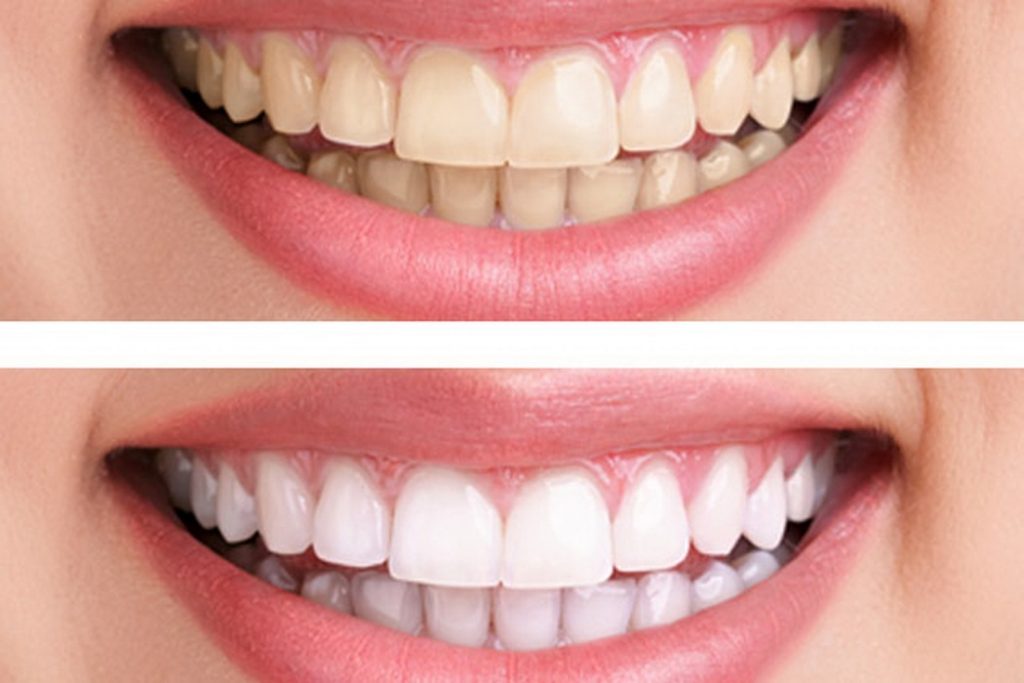
How professional whitening works
Whitening uses a peroxide-based gel that lightens stains inside the tooth. Depending on the method, it is applied at the clinic or in custom-fitted trays that you wear at home for a period your dentist sets. Products bought elsewhere may not be safe or suitable, and can harm the teeth and gums, so whitening should be done or supervised by a dentist.
Who whitening is and is not suitable for
- Whitening only works on natural teeth. It will not change the colour of crowns, veneers, fillings or dentures, so they may look different from your whitened teeth.
- It is not suitable if you have decay, gum disease or worn enamel that has not been treated first.
- It is not usually advised for children and teenagers, or during pregnancy and breastfeeding.
- Some kinds of staining respond less well, for example grey staining from certain medicines or injuries.
The dentist will tell you at the check whether whitening suits you.
What happens
- Check. The dentist examines your teeth and gums, treats any decay or gum problems first, and explains what whitening can and cannot do for your teeth.
- Protecting your gums. Your gums and soft tissues are protected from the gel.
- Whitening. The gel is applied at the clinic or you use custom trays at home, as the dentist explains.
- Review. The dentist checks the result and gives you aftercare advice.
Side effects
- Teeth can become sensitive to cold or sweet food and drink. This is usually temporary.
- Gums or the throat can feel sore or irritated. Tell the dentist if this happens.
- White patches can appear on the gums. They usually fade quickly.
If you have any of these, tell your dentist, who can change the method or the length of treatment.
Making the result last
- Try to limit tea, coffee, red wine and dark sauces, especially in the first days after treatment.
- Do not smoke. Tobacco stains teeth.
- Brush twice a day, clean between your teeth and keep going to dental check-ups.
- Ask your dentist if and when a top-up is worth having.
When to get urgent help
Go to the nearest hospital straight away (or call 112) if you have swelling of the face or neck, swelling that makes it hard to breathe or swallow, or a fever together with tooth or gum pain. Do not wait for an appointment.
Common questions
Does it hurt?
Whitening should not be painful, but many people notice temporary sensitivity. Tell your dentist so it can be managed.
How long will it last?
Whitening is not permanent. How long it lasts depends on your teeth, what you eat and drink, and whether you smoke. Your dentist can tell you what to expect.
Is it safe?
Whitening done or supervised by a dentist, on healthy teeth, is generally considered safe. Products from other sources may not be.
Will it whiten my crowns or fillings?
No. Whitening only affects natural teeth. Your dentist will explain how this might affect the look of your smile.
Can I whiten while pregnant?
It is usually advised to wait. Tell your dentist if you are pregnant or breastfeeding.
Tooth whitening at Gangtok Dental Clinic
Dr. Anjali Gupta sees patients at Gangtok Dental Clinic and has more than 6 years of experience in dentistry. She will check that your teeth and gums are healthy and tell you what whitening can and cannot do before you decide. She will explain what she finds and go through your options and the cost with you, and nothing is started until you are ready to go ahead.
We are open every day from 10:00 AM to 8:00 PM. Call or message us on WhatsApp at +91 82106 99271 to book a whitening check. Our address is on the contact page.
This page gives general information about the treatment. It is not a diagnosis or medical advice, and what you need depends on an examination by your dentist. Please read our Medical Disclaimer.