Dentures are removable false teeth. A complete denture replaces all of the teeth in the upper or lower jaw. A partial denture replaces one or more missing teeth.
At a glance
- Complete denture
- Replaces all the upper or all the lower teeth
- Partial denture
- Replaces one or more missing teeth
- Visits
- Several visits over a few weeks while the denture is made
- Getting used to it
- Takes time for eating and speaking
- Cost
- Depends on the type and materials. Your dentist tells you before starting.
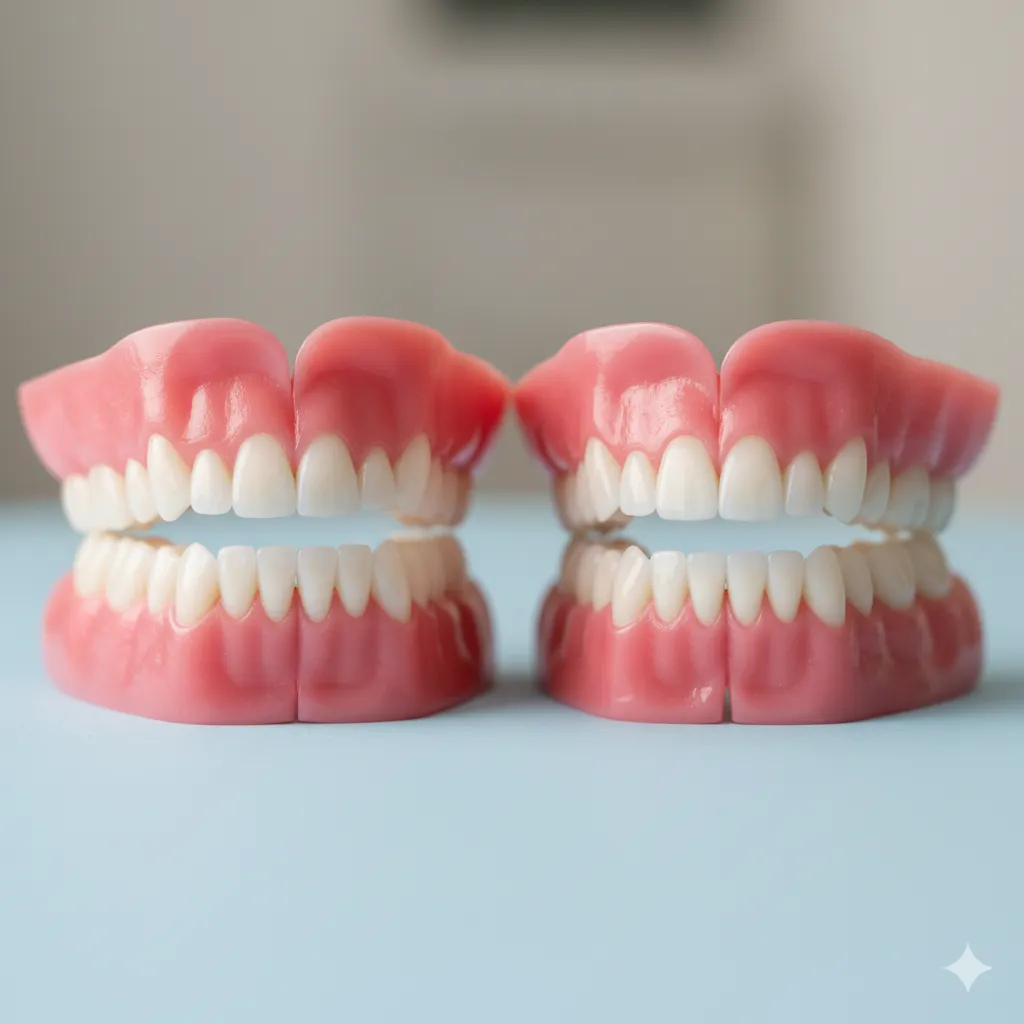
Who dentures are for
Dentures are for people who have lost teeth through decay, gum disease, injury or age. They help with chewing and speaking, and they support the lips and cheeks. Your dentist will look at your mouth and tell you whether a complete or partial denture, or another option such as a bridge or an implant, suits you.
How dentures are made and fitted
- Examination. The dentist checks your mouth and talks through the options. Any teeth that cannot be saved may be taken out first.
- Impressions. A mould or scan of your gums and any remaining teeth is taken.
- Try-in. You may try a trial version so the dentist can check the fit, the bite and how the teeth look.
- Fitting. The finished denture is fitted and adjusted. There may be follow-up visits to correct sore spots.
If a tooth has to be taken out, an immediate denture can sometimes be made so you are not left without teeth. These often need adjusting as your gums heal and change shape.
Getting used to your dentures
- Dentures can feel bulky or loose at first, and you may notice more saliva. This usually settles.
- Start with soft food cut into small pieces and chew on both sides of your mouth.
- Reading aloud helps you get used to speaking with them.
- Practise taking them out and putting them in.
Ask us to look at your dentures if a spot is sore. Do not try to adjust them yourself.
Cleaning and caring for dentures
- Take your dentures out and clean them every day with a soft brush and soap or a denture cleaner. Do not use toothpaste, because it can scratch them.
- Clean over a bowl of water or a folded towel, so they do not break if you drop them.
- Take them out at night and keep them in water or a denture-soaking solution.
- If you have some of your own teeth left, keep brushing them with fluoride toothpaste.
- Keep going to your dental check-ups, even if you have no natural teeth left.
When to have them looked at
Gums and jawbone shrink over time, so dentures can become loose. They can also wear down or get damaged. See your dentist if your dentures click, slip, hurt or look damaged, if your gums are red or bleeding, or if you have bad breath.
When to get urgent help
Go to the nearest hospital straight away (or call 112) if you have swelling of the face or neck, swelling that makes it hard to breathe or swallow, or a fever together with tooth or gum pain. Do not wait for an appointment.
Common questions
Can I eat anything with dentures?
You may need to build up gradually. Start with soft foods. Very hard or sticky foods can be difficult.
Will they look natural?
The dentist chooses the shape and shade to suit your face and any remaining teeth. You can tell the dentist what you want and see a trial version before the final fitting.
Do I have to take them out at night?
Yes, this is usually advised. It gives your gums a rest and helps keep your mouth healthy.
How long do dentures last?
It depends on how they wear and how your mouth changes. They usually need relining, repair or replacing at some point.
Are there alternatives?
Yes. Depending on your mouth, options can include bridges and implants. Your dentist will explain these to you.
Complete dentures at Gangtok Dental Clinic
Dr. Anjali Gupta sees patients at Gangtok Dental Clinic and has more than 6 years of experience in dentistry. She will look at your gums and any remaining teeth first and tell you what she thinks would suit you. She will explain what she finds and go through your options and the cost with you, and nothing is started until you are ready to go ahead.
We are open every day from 10:00 AM to 8:00 PM. Call or message us on WhatsApp at +91 82106 99271 to book an examination. Our address is on the contact page.
This page gives general information about the treatment. It is not a diagnosis or medical advice, and what you need depends on an examination by your dentist. Please read our Medical Disclaimer.