Tooth-coloured fillings and bonding repair a tooth that has decay, a chip or a small break, using a material matched to the colour of your tooth. The material is built up and shaped directly onto the tooth in one visit.
At a glance
- What it is
- A tooth-coloured material used to fill a cavity or repair a chipped or broken tooth
- Numbing
- Local anaesthetic if decay needs to be removed; often not needed for a simple chip repair
- Time or visits
- Usually done in a single visit
- Aftercare
- Normal eating once numbness wears off, and regular check-ups
- Cost
- Depends on the size and number of teeth involved. Your dentist tells you before starting.
What this treatment is
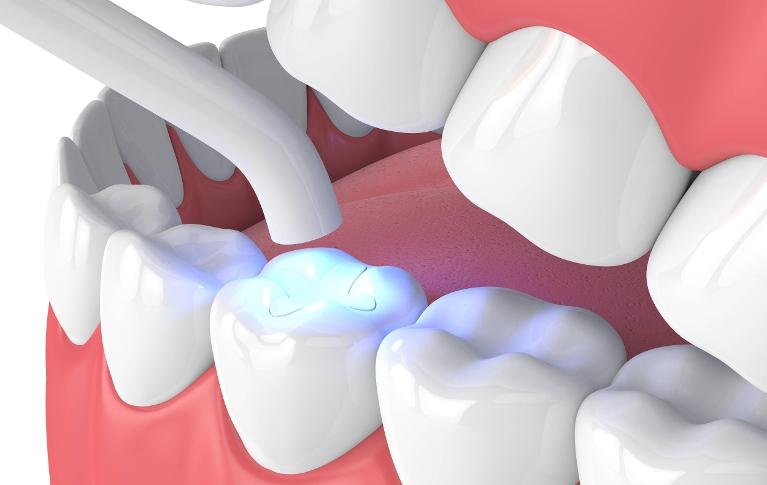
When a tooth has a cavity, a chip, or a small crack, the damaged part can often be repaired without a crown, using a tooth-coloured filling material called composite resin. For decay, the dentist removes the decayed part of the tooth and fills the space with this material. For a chipped or slightly broken tooth, the same material can be bonded directly onto the tooth to rebuild its shape, which is often called bonding. The material is shaped and polished to match the tooth around it.
When this is needed
- A cavity found at a check-up or on an X-ray
- A tooth that has chipped from biting on something hard or from a knock
- A small crack or rough edge on a front tooth that catches on your lip or tongue
- A gap between two front teeth that you would like closed
- An old, discoloured filling that needs replacing
What happens step by step
- Examination. The dentist checks the tooth, and may take an X-ray at the clinic if there is decay that cannot be fully seen.
- Numbing, if needed. Local anaesthetic is given if decay has to be removed.
- Preparing the tooth. Any decay or damaged edge is cleaned away, and the surface is prepared so the material bonds well.
- Placing the material. The tooth-coloured material is applied in layers and shaped to rebuild the tooth.
- Setting and polishing. A curing light hardens each layer, and the filling is shaped, smoothed and polished so it feels natural to bite on.
After treatment
- If you were numbed, avoid eating or drinking hot liquids until the numbness has worn off, so you do not bite your cheek or lip.
- Some sensitivity to hot, cold or pressure for a few days is normal and usually settles.
- Brush and floss as usual, including around the filled tooth.
- Avoid biting very hard foods directly on a bonded edge, especially in the first few days.
Risks and other options
Tooth-coloured fillings and bonding can wear or chip over time, especially on teeth that take a lot of biting force, and may need repair or replacement eventually. They can also pick up staining from tea, coffee or tobacco over the years. For a tooth with a larger break, a crown may be a better option, and the dentist will discuss this with you. See our Dental Fillings and Restoration page and Crowns and Bridges page for related treatments.
When to get urgent help
See your dentist soon if a filling or bonding breaks or falls out, or if a tooth is causing ongoing pain. Go to the nearest hospital straight away (or call 112) if you have swelling of the face or neck, swelling that makes it hard to breathe or swallow, or a fever together with tooth pain. Do not wait for an appointment.
Common questions
Will it hurt?
If decay needs removing, the area is numbed first. Bonding a small chip often does not need any numbing at all.
How long does a tooth-coloured filling last?
It varies with the size of the filling, where it is, and how you look after your teeth. Regular check-ups help catch any wear or damage early.
Can bonding fix a gap between my front teeth?
It can help close small gaps in some cases. The dentist will look at your teeth and tell you if it is a suitable option.
Will the colour match my other teeth?
The material is chosen to match the shade of your tooth as closely as possible, though results and how well it blends vary from person to person.
Can the filling stain over time?
Yes, tea, coffee, and tobacco or paan and gutka can stain it over the years, the same as they can stain natural teeth.
How much does it cost?
It depends on the size and number of teeth involved, so we can only tell you after examining you. Dr. Anjali will explain the cost before starting.
Tooth-coloured fillings and bonding at Gangtok Dental Clinic
Dr. Anjali Gupta sees patients at Gangtok Dental Clinic and has more than 8 years of experience in dentistry. She will examine your tooth first, explain what she finds, go through the options and the cost with you, and nothing is started until you are ready to go ahead.
We are open every day from 10:00 AM to 8:00 PM. Call or message us on WhatsApp at +91 82106 99271 to book a check. Our address is on the contact page.
This page gives general information about the treatment. It is not a diagnosis or medical advice, and what you need depends on an examination by your dentist. Please read our Medical Disclaimer.