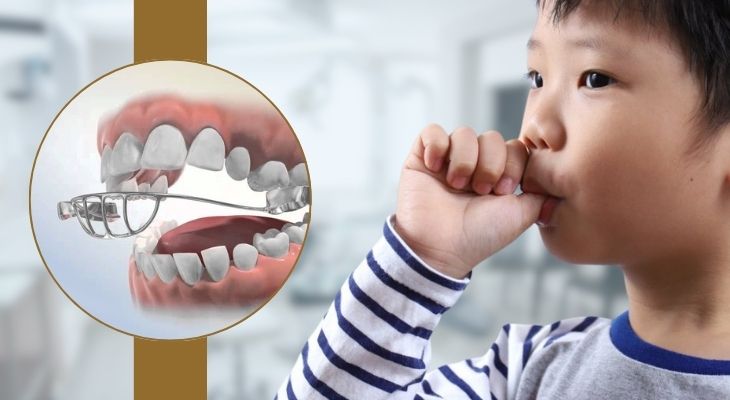
Space maintainers hold a gap open when a child loses a baby tooth too early, so the other teeth do not drift into the space. Thumb-sucking appliances are used when a habit of thumb or finger sucking is affecting how a child’s teeth or jaw are developing.
At a glance
- Space maintainer
- A small custom appliance that keeps a gap open after a baby tooth is lost early
- Thumb-sucking appliance
- A device fitted to help a child stop a thumb or finger-sucking habit
- Numbing
- Usually not needed to fit these appliances
- Time or visits
- A fitting visit, then regular check-ups to see the appliance is still comfortable
- Cost
- Depends on the appliance needed. Your dentist tells you before starting.
Why these are used
Baby teeth are not just for eating and speaking. They also hold space for the adult teeth growing underneath. If a baby tooth is lost early, from decay or an accident, the teeth next to the gap can tilt or drift into the space before the adult tooth is ready to come through, which can lead to crowding later. A space maintainer is a small, custom-made appliance that sits in the gap and keeps the neighbouring teeth in place until the adult tooth is ready to erupt. Thumb or finger-sucking is very common in young children and usually stops on its own. If it continues once the adult front teeth are coming through, it can push the teeth or the jaw out of their normal position, and an appliance can help the child break the habit.
When these are needed
- A baby tooth lost well before the usual age, from decay or an injury
- A gap where neighbouring teeth are starting to lean or drift
- A thumb or finger-sucking habit that continues past about four to five years of age
- Front teeth that are being pushed forward or a bite that is not closing normally
What happens step by step
- Examination. The dentist checks the child’s teeth and jaws, and may take an X-ray at the clinic to see how the adult teeth are developing underneath.
- Discussion. The dentist explains whether a space maintainer or a habit-breaking appliance is suitable, and how it works.
- Taking measurements. An impression or a digital scan of the child’s teeth is taken so the appliance can be custom made.
- Fitting. The appliance is fitted and checked for comfort. This usually does not need any numbing.
- Follow-up visits. The dentist checks the appliance regularly to see it is still fitting well and doing its job, and removes it once it is no longer needed.
Looking after the appliance
- Clean the appliance and the child’s teeth as shown by the dentist.
- Avoid sticky or very hard foods that could loosen or damage the appliance.
- Bring your child back for the check-up visits, since a growing child’s mouth changes and the appliance is monitored for fit.
- Encourage and support your child, especially with a thumb-sucking appliance, since breaking a habit takes patience.
Risks and other options
A space maintainer that comes loose or is left in too long without check-ups can cause problems rather than prevent them, which is why regular visits matter. Thumb-sucking appliances work alongside encouragement at home, and results vary from child to child. Not every case needs an appliance. For mild habits, the dentist may first suggest simple habit-breaking encouragement and review the child again before recommending an appliance. See our Children’s Dentistry page for general check-ups and preventive care.
When to get urgent help
See your dentist soon if the appliance becomes loose, broken, or is causing your child pain or discomfort. Go to the nearest hospital straight away (or call 112) if your child has swelling of the face or neck, swelling that makes it hard to breathe or swallow, or a fever together with tooth or mouth pain. Do not wait for an appointment.
Common questions
Will it hurt my child?
Fitting these appliances is not usually painful. There can be a short adjustment period while the child gets used to it in their mouth.
How long does a child need a space maintainer?
Until the adult tooth underneath is ready to come through. This varies by child and is monitored at check-ups.
Will thumb-sucking stop by itself?
Many children stop on their own by around four years of age. An appliance is usually only considered if the habit continues and is affecting the teeth or jaw.
Can my child eat normally with the appliance?
Usually yes, though the dentist will advise on foods to avoid so the appliance is not damaged or loosened.
What if my child loses or breaks the appliance?
Contact the clinic so it can be checked and repaired or replaced if needed, rather than leaving the gap unmanaged.
How much does it cost?
It depends on the type of appliance needed, so we can only tell you after examining your child. Dr. Anjali will explain the cost before starting.
Children’s appliances at Gangtok Dental Clinic
Dr. Anjali Gupta sees patients at Gangtok Dental Clinic and has more than 8 years of experience in dentistry. She will examine your child’s teeth first, explain what she finds, go through the options and the cost with you, and nothing is started until you are ready to go ahead.
We are open every day from 10:00 AM to 8:00 PM. Call or message us on WhatsApp at +91 82106 99271 to book a check-up. Our address is on the contact page.
This page gives general information about the treatment. It is not a diagnosis or medical advice, and what you need depends on an examination by your dentist. Please read our Medical Disclaimer.